

Play to Earn game development is the process of building blockchain-based games where players earn real rewards such as crypto tokens or NFTs through gameplay. These rewards are stored on the blockchain, giving players full ownership of their in-game assets. Unlike traditional games, assets can be traded, sold, or used outside the game. This model creates a decentralized gaming experience with real economic value.

Players fully control their NFTs, tokens, or digital items, with the ability to trade or sell them externally.

The blockchain network stores rewards, which provides security and transparency, while enabling people to verify their ownership.

Players can sell or trade their in-game digital items through marketplaces, which allows their gameplay activities to generate actual monetary worth.

Many P2E games include token systems that players can earn, spend, or stake to participate in the game economy.

Some P2E games permit players to participate in decision-making processes, which gives players the power to shape game updates and rules and control governance systems.
Defines core gameplay, progression, art style, economy, narrative, and monetization in a structured document guiding teams, stakeholders, and production decisions clearly effectively.
Plans network selection, wallets, data flow, scalability, and security to guarantee a low fees, performance, interoperability, and compliance across decentralized game systems worldwide.
Designs balanced in-game economies using tokens, sinks, rewards, and controls to incentivize play, prevent inflation, and support long-term value for players, ecosystems.
Builds audited, secure blockchain logic handling assets, rewards, governance, and transactions, guaranteeing a transparency, automation, and trustless gameplay execution at scale globally, safely.
Enables creation, ownership, trading, and liquidity of game assets through NFTs and marketplaces, improving player value, usability, and interoperability securely, compliantly, sustainably.
The system uses structured token economies to sustain user involvement while protecting the value of digital assets

Players use these tokens for purchasing in-game items and conducting upgrades and making transactions.

Players use these tokens to participate in decision-making processes that affect the game.

The system preserves token value throughout different time periods.

The two systems together create incentives for users to participate in the platform throughout the extended duration.

The system prepares itself to support upcoming community governance.
NFTs function as digital assets which exist as non-fungible tokens for use in P2E gaming environments.
ERC-721 establishes unique item standards while ERC-1155 enables the creation of multiple-item collection systems.
Players have the option to improve their assets through trading and transferring them between different gaming platforms.
NFTs can sometimes be used in multiple games or metaverse environments.
Advanced P2E games include

Players can buy, sell, or develop digital land

Assets remain under player control

Integration with metaverse platforms enhances gameplay
Players earn tokens and NFTs by completing missions or quests.
The system provides rewards which depend on the user s ability to make strategic decisions.
The NFT cards in the game function as valuable assets which users can exchange with each other.
Players in these games compete against each other while earning cryptocurrency rewards.
It provide players with rewards through their basic loop or their ongoing idle gameplay.
It allows players to obtain rewards by performing physical tasks and through their combined use of different earning techniques.

Ethereum

BNB Chain

Polygon

Solana

Avalanche

Immutable X

Arbitrum

Optimism
Unity

Unreal Engine

WebGL

HTML5
Smart Contracts

IPFS

Filecoin
P2E games create income streams that maintain player interest. The standard monetization techniques for P2E games consist of
Players purchase characters, skins, weapons, or virtual land.
Charged on token transfers or swaps.
Players stake tokens or NFTs to earn rewards which help the game ecosystem.
Premium passes unlock special missions, content, or NFTs.
Players spend tokens to enhance their characters and NFTs and abilities.
Virtual land can be sold or rented for long-term engagement.
Brands or events can be integrated into the game environment.
Play To Earn Game Development Services cover the full lifecycle of P2E games.
Define target audience, gameplay style, and earning model.
Outline NFTs, tokens, and reward mechanisms.
Develop secure smart contracts for tokens, NFTs, and rewards.
Use modern engines and blockchain systems and wallet systems and marketplace systems.
The process checks both gameplay functions and smart contract protections.
The game will be available on selected blockchain networks.
The process includes system updates and performance monitoring and problem solving.
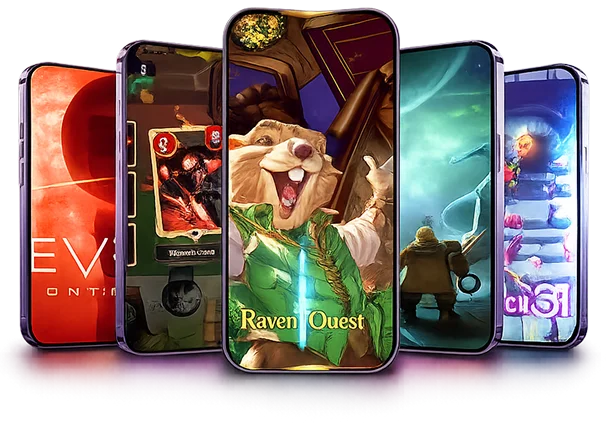
Teams with experience in Play To Earn Game Development focus on creating blockchain games that integrate NFT marketplaces, token economies, and secure smart contracts. Developers with over 7 years of experience design scalable and immersive P2E experiences, guaranteeing games are secure, feature-rich, and compatible with multiple blockchain platforms.
Customer feedback and reviews are our major concerns! Here we have shared a Ratings of our reputed clients







You let us know what you need, Technical experts will call to review your needs in detail.We promise to keep all information private.






 Whatsapp
 Telegram


